Cold chain: what actually degrades a peptide
Ask a lab what its peptide storage protocol is and you will usually hear a temperature. Temperature matters, but it is one variable among several, and it is not always the one that ruins a sample.
1. Hydrolysis
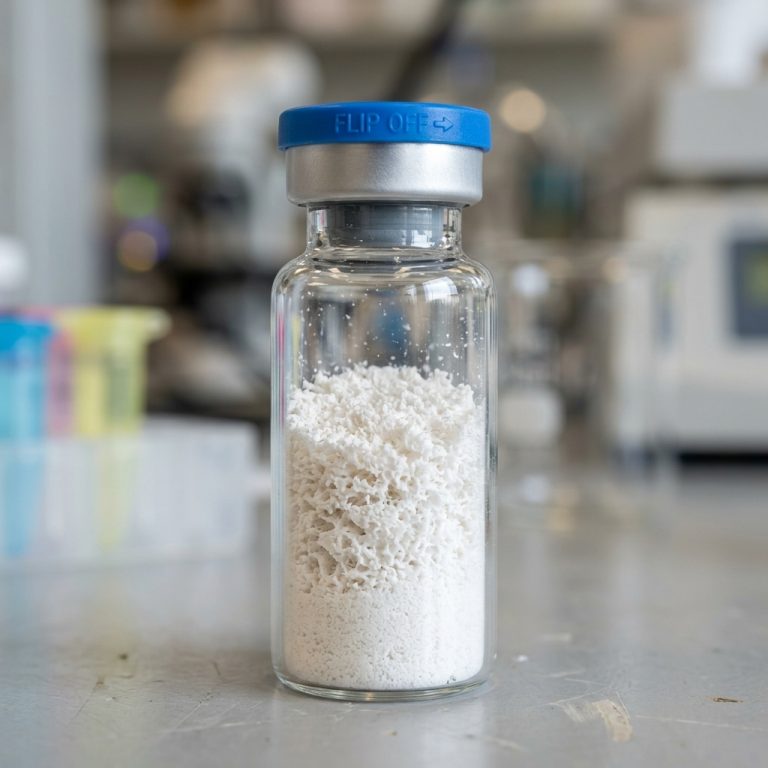
Water is the primary enemy of a lyophilized peptide. Moisture ingress allows hydrolysis of the peptide backbone, and it is why lyophilized material is stored desiccated rather than merely cold. The most common way moisture gets in is not a failed seal — it is condensation forming on a cold vial opened in a warm room.
This is the entire reason for the “allow the vial to reach room temperature before opening” step. Skipping it pulls humid air onto a cold glass surface, and the water condenses directly onto your material.
2. Oxidation
Sequences containing methionine, cysteine, or tryptophan residues are susceptible to oxidation. Exposure to atmospheric oxygen and to light both accelerate it. Amber vials and minimal headspace help; so does not leaving a vial open on the bench while you find a pipette.
3. Freeze–thaw cycling
Each freeze–thaw cycle is a mechanical and chemical stress on a reconstituted peptide — ice crystal formation, local concentration changes at the freezing front, and pH shifts as buffer components crystallise at different rates. The damage accumulates.
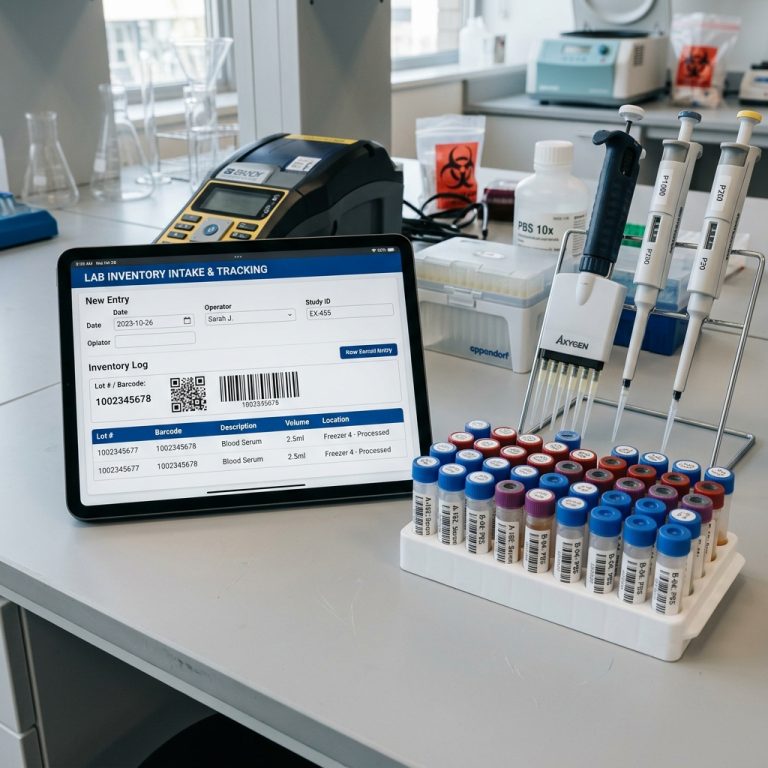
The practical mitigation is aliquoting: divide reconstituted material into single-use volumes at the point of reconstitution so that no aliquot is ever thawed twice. This is the single highest-value habit in peptide handling and it costs about ninety seconds.
4. Adsorption
At low concentrations a meaningful fraction of peptide can adsorb onto container walls, particularly with untreated polypropylene. This does not degrade the material so much as quietly remove it from solution, which shows up as an unexplained loss of activity. Low-bind labware addresses it.
Designing around all four
A storage protocol that only controls temperature addresses one of these pathways. A more complete one reads roughly:
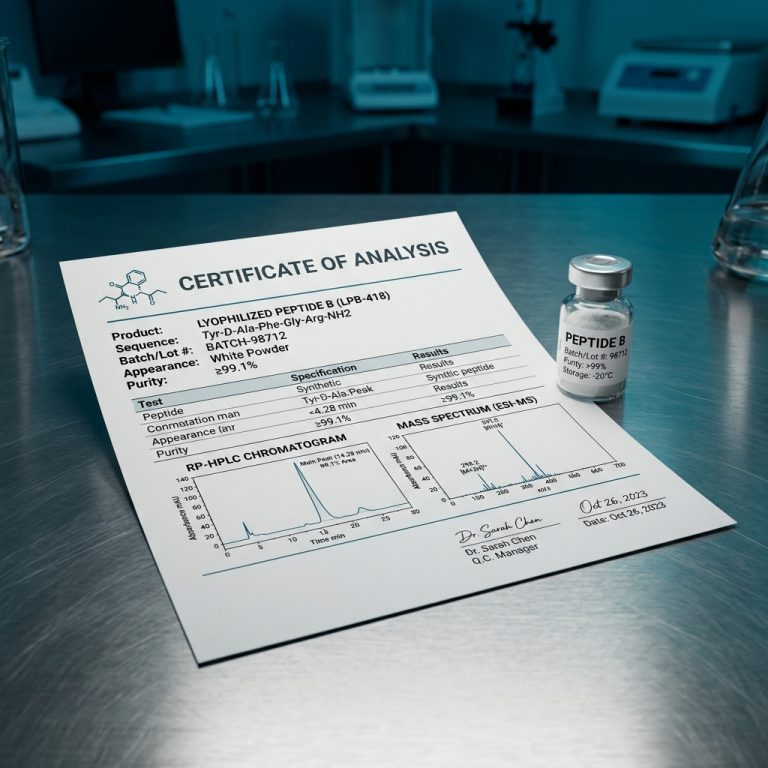
- Lyophilized: -20°C, desiccated, protected from light, in the original sealed vial.
- Reconstituted: 2–8°C for short-term use; aliquot and freeze for anything longer.
- Always: equilibrate to room temperature before opening; minimise open-air time; never re-freeze a thawed aliquot.
Our full procedure is written up in the Storage & Handling guide.