Lyophilization: why peptides ship as a powder
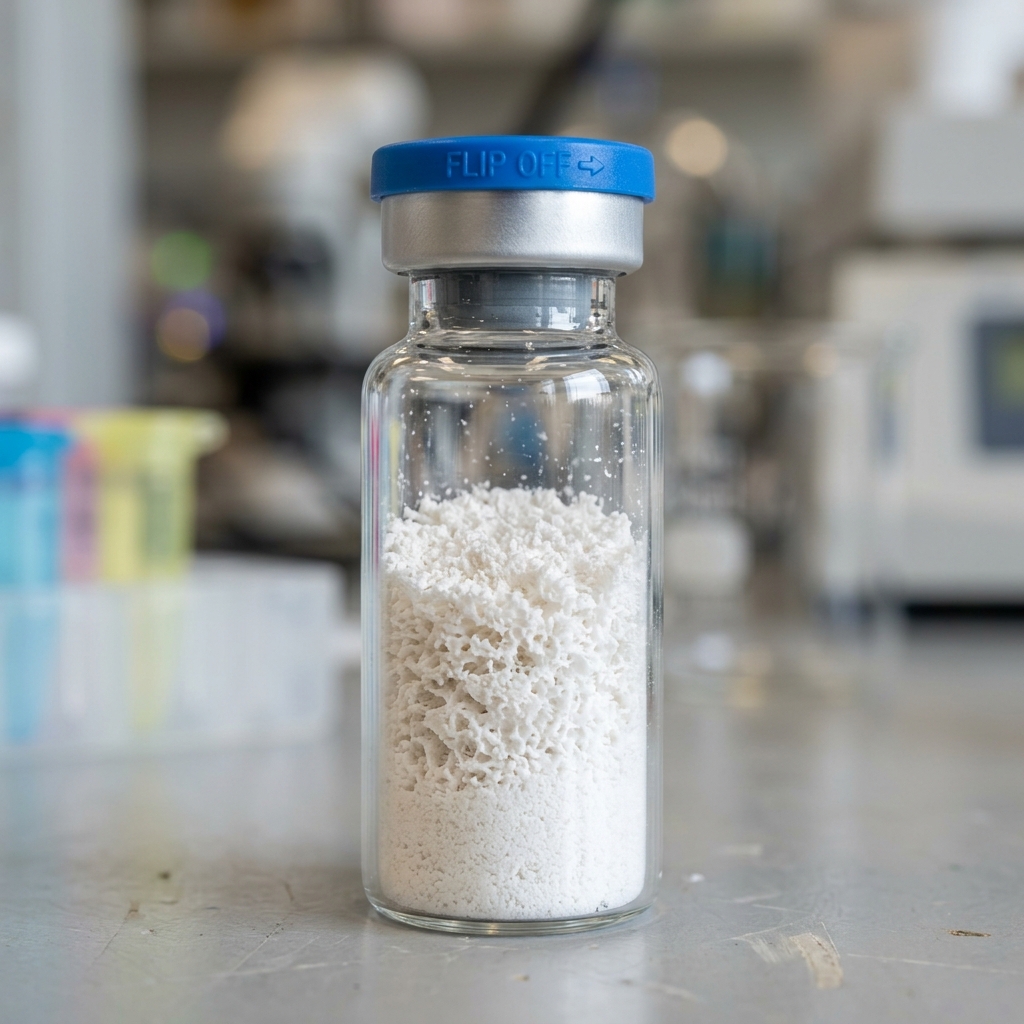
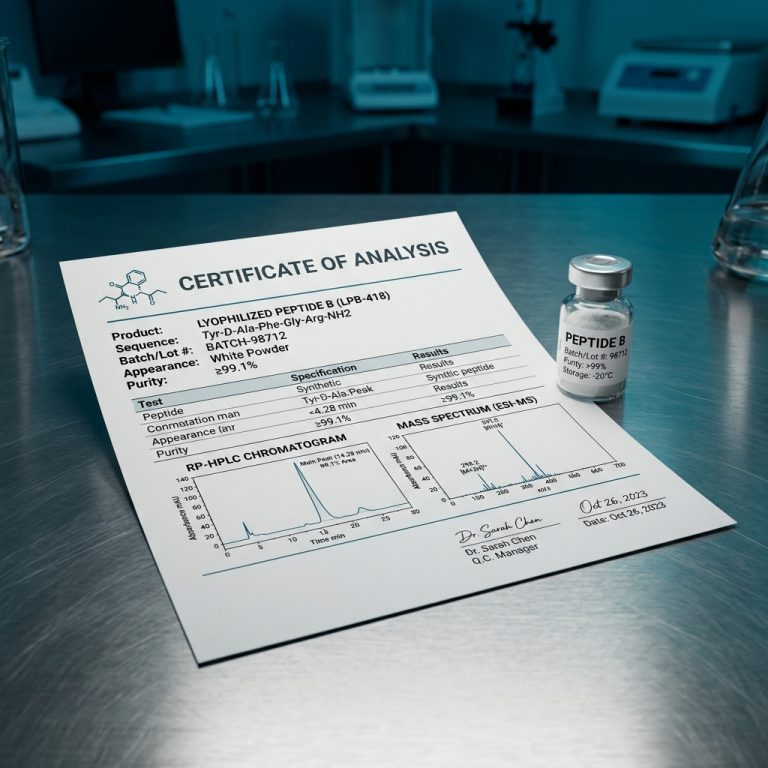
Research peptides almost always arrive as a lyophilized powder rather than a solution. The reason is worth understanding, because it explains most of the handling procedure that follows from it.
What lyophilization does
Freeze-drying removes water by sublimation: the material is frozen, then held under vacuum so ice passes directly from solid to vapour without an intervening liquid phase. Because the material never passes through a liquid state during drying, structures that would be disrupted by surface tension at a receding liquid interface stay intact.
The output is a porous cake with very low residual moisture. That porosity is what allows it to redissolve quickly.
Why it matters for stability
Nearly every significant degradation pathway for a peptide requires water — hydrolysis directly, and most others are substantially accelerated in solution because molecular mobility is higher. Removing water does not merely slow degradation; it removes the reactant for the dominant pathway.
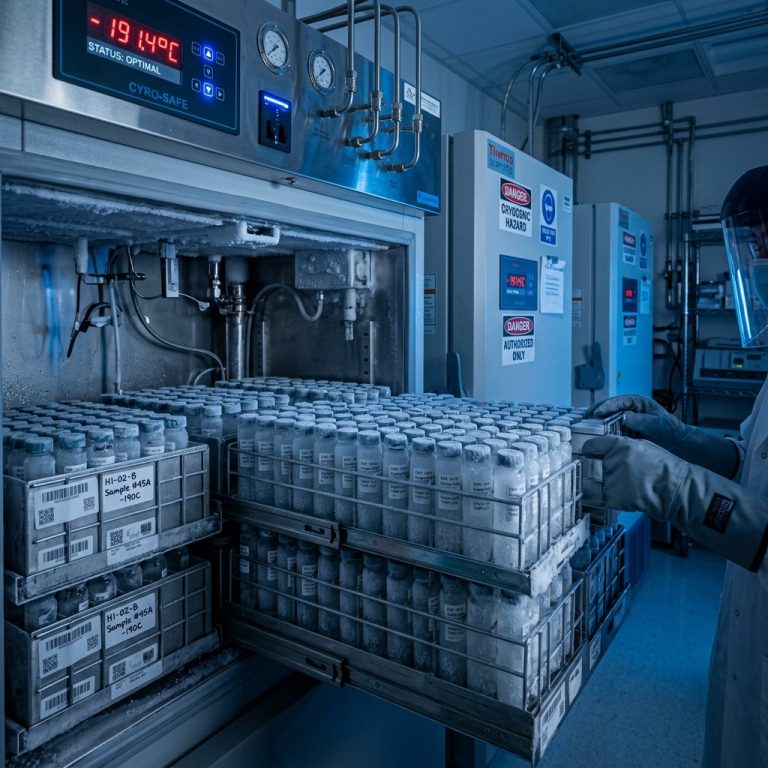
This is why the two storage regimes are so different. Lyophilized material held at -20°C and desiccated is stable for very long periods. The same compound in solution at 2–8°C is stable for weeks. Same molecule, different physics.
The cake tells you things
A well-lyophilized cake is uniform and occupies a predictable volume. Two observations are worth noting at intake:
- Collapsed or shrunken cake — may indicate the material warmed above its glass transition temperature during drying or transit.
- Visible moisture or a gummy texture — indicates moisture ingress, which means hydrolysis has had the opportunity to begin.
Neither observation is automatically disqualifying, but both are worth recording against the lot.
Powder at the bottom, or not
Lyophilized material is light and frequently ends up distributed on the vial walls or in the stopper during shipping. This is normal and is not lost material. A brief centrifugation, or simply tapping the vial down before opening, collects it. Full procedure is in the Reconstitution guide.